




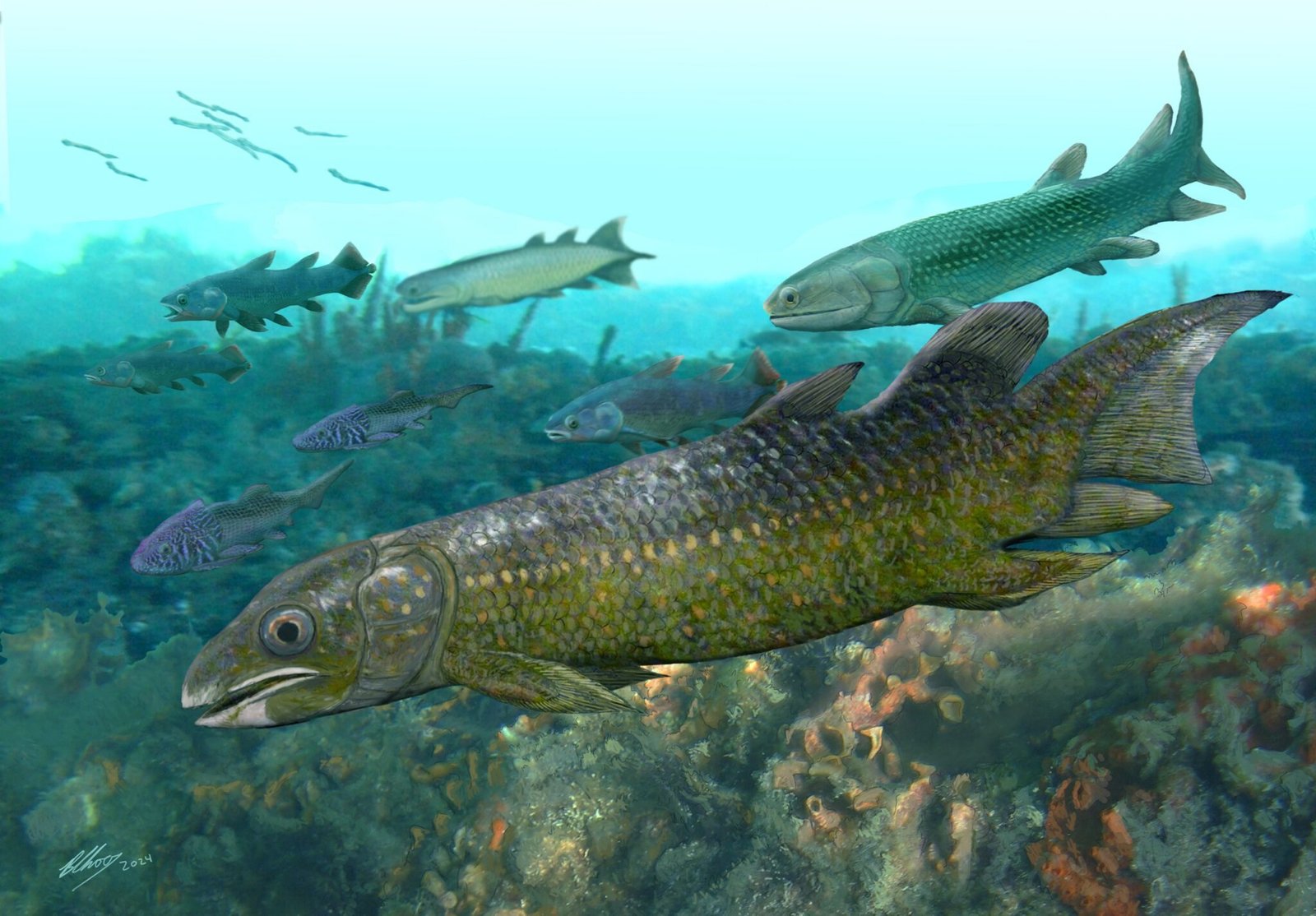
Scientists in Australia and China have found new clues about primitive lungfishes, the closest living relatives of land vertebrates.
“New pieces have been added to the puzzle of the evolution of some of the oldest fish that lived on Earth more than 400 million years ago,” said a statement from Australia’s Flinders University on Thursday.
The new research builds on long-running work by Flinders University and other paleontologists in the fossil-rich Gogo site in the Australian state of Western Australia’s (WA) far north, and with the Chinese Academy of Sciences, the statement said.
The study of living and fossil lungfish provides anatomical clues into the evolutionary development of tetrapods, backboned animals with limbs including humans, that first left the water to live on land, it said.
The mysterious fossil from the Late Devonian Gogo Formation in WA has been further analyzed using CT scanning and computed tomography, with the results published in the Canadian Journal of Zoology.
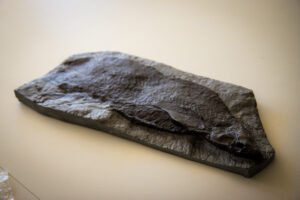
New research is slowly adding to the story of the key Australian fossil site’s rich diversity of lungfishes, including re-examining poorly preserved specimens, said study lead author Alice Clement, paleontologist at Flinders University.
In a separate paper in Current Biology, another reconstruction of an early fish skull has described a species called Paleolopus, a lungfish that swam in the South Chinese seas 410 million years ago.
Flinders researcher Brian Choo and colleagues from the Chinese Academy of Sciences have called the new fossil, Paleolophus yunnanensis, discovered in 410-million-year-old rocks in southwest China’s Yunnan province, offering key insights into the rapid evolutionary diversification between the early-, mid- and late Devonian period.